Selling on Amazon may look like a simple game: add a product, wait for orders, and let Amazon handle the rest. But behind every successful Amazon brand, there is one important decision that can shape your profits, customer experience, and future growth, choosing the right fulfillment method. The big question every seller eventually faces is, Amazon FBA vs FBM: Which option can actually take my business to the next level?
There is no one-size-fits-all answer. The best choice depends on what you sell, how much control you want, your budget, and where you see your business in the future. Let me walk you through the real differences between FBA and FBM, break down the pros and cons, and help you figure out which fulfillment strategy makes the most sense for your Amazon journey.
What Is Amazon FBA?
Before comparing options, let’s understand the basics. Many new sellers ask, “What does fulfilled by Amazon mean?” Amazon FBA (Fulfillment by Amazon) means you send your products to Amazon’s fulfillment centers, and Amazon handles storage, packing, shipping, returns, and customer service.
In simple words, Amazon becomes your delivery partner.
The fulfilled by Amazon meaning is easy to understand:
- You send inventory to Amazon.
- Amazon stores your products.
- A customer places an order.
- Amazon packs and ships the order.
- Amazon manages customer support and returns.
This model allows sellers to focus more on product research, branding strategy, marketing, and improving their product listing instead of managing daily shipping tasks.
For sellers who want expert guidance, working with an experienced Amazon FBA agency can make the setup process smoother and help avoid common mistakes.
What Is Amazon FBM?
Amazon FBM (Fulfillment by Merchant) works differently. With FBM, the seller manages the entire fulfillment process. You store your inventory, pack orders, ship products, and handle customer service yourself or through a third-party logistics provider.
The idea behind Amazon fulfilled by merchant is complete control.
You decide:
- Where to store your inventory
- Which shipping company to use
- How to manage delivery options
- How to handle returns
- How to control fulfillment costs
For some sellers, this flexibility is valuable. For others, the extra responsibility can become challenging as orders increase.
Amazon FBA vs FBM: Understanding the Key Differences
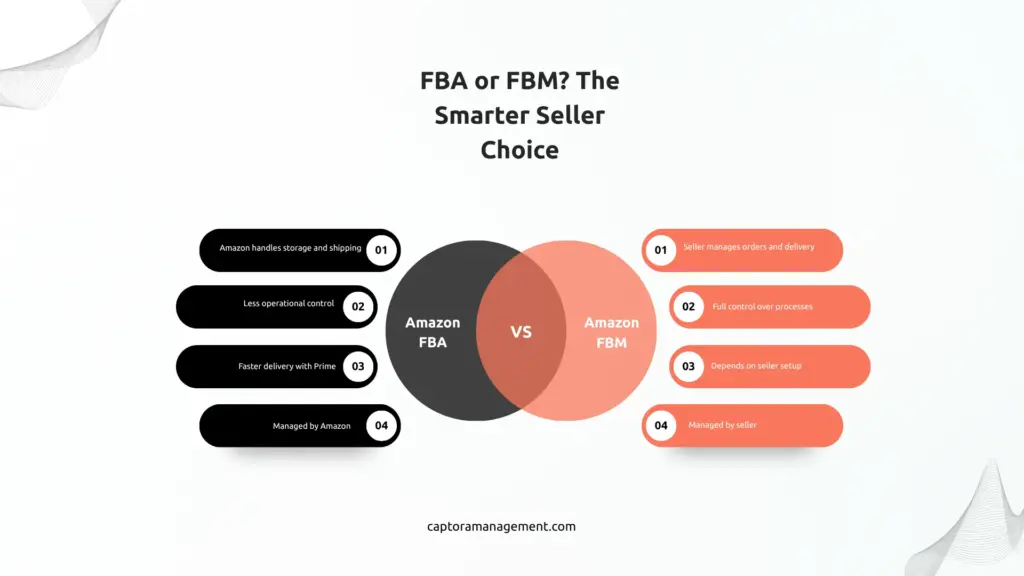
When comparing Amazon FBA vs FBM, the main difference comes down to control versus convenience.
Here is a simple breakdown:
a) Storage and Inventory Management
FBA:
Amazon stores your products in its fulfillment centers. You do not need your own warehouse.
FBM:
You manage storage yourself or work with a warehouse partner. If you sell small, lightweight products with consistent demand, FBA can save valuable time. However, if you sell large or slow-moving products, FBM may reduce storage expenses.
b) Shipping and Delivery
Amazon has built one of the fastest delivery networks in the world. FBA products often qualify for Amazon Prime, which can increase buyer confidence. With FBM, sellers control their shipping process. They can choose different carriers and create their own delivery strategy.
This is why many sellers compare fulfilled by Amazon vs. fulfilled by merchant before selecting a model.
c) Customer Service
Customer experience can make or break an Amazon business. With FBA, Amazon manages customer questions, refunds, and returns.
With FBM, sellers handle customer service directly. This gives sellers more personal interaction but requires more time and resources.
Amazon FBA vs Amazon FBM: Which One Costs Less?
A common question is, “Which model is cheaper?” The answer depends on your business model.
FBA includes fees for:
- Storage
- Picking and packing
- Shipping
- Customer service
- Returns processing
FBM reduces Amazon fulfillment fees, but you pay for:
- Warehouse space
- Packaging materials
- Employees or fulfillment partners
- Shipping expenses
- Time management
A proper cost analysis helps determine the better option.
For example:
- A small seller shipping 20 orders monthly may prefer FBM.
- A growing brand shipping thousands of orders may benefit from FBA.
Your pricing strategy, profit margins, and competitive pricing goals should guide your decision.
Pros and Cons of Amazon FBA
Credit: appscenic.com
Advantages of FBA:
- Access to Amazon Prime customers
- Faster delivery options
- Less daily operational work
- Professional fulfillment system
- Amazon handles customer service
- Easier scaling for growing brands
Challenges of FBA:
- Additional fulfillment costs
- Less control over inventory
- Storage fees during slow seasons
- Need for accurate inventory planning
Pros and Cons of Amazon FBM
Advantages of FBM:
- More control over operations
- Potentially lower costs for certain products
- Flexible packaging and branding strategy
- Direct customer relationship
Challenges of FBM:
- More responsibility
- Managing shipping delays
- Handling customer service yourself
- More time spent on operations
Who Should Choose Amazon FBA?
Credit: linkercloud.com
Amazon FBA is usually a strong choice for sellers who want scalability.
It works well for:
- Private label brands
- High-demand products
- Sellers targeting Amazon Prime customers
- Businesses that want to focus on marketing and growth
If your goal is building a long-term brand, FBA can give you more time to focus on product development, promotional offers, and understanding your buyer persona.
Who Should Choose Amazon FBM?
FBM may be better for sellers who want more control.
It can work well for:
- Handmade product sellers
- Large or heavy products
- Products with low sales volume
- Businesses with existing warehouses
Some sellers also combine both methods. They use FBA for popular products and FBM for special inventory.
How To Choose Between Amazon FBA and FBM
Instead of asking which model is universally better, ask which model fits your business.
Consider these questions:
a) What is your product type?
Small, fast-selling products often perform well with FBA. Large or customized products may work better with FBM.
b) How much control do you need?
If you want Amazon to handle logistics, FBA is attractive. If you want full control, FBM gives you more freedom.
c) What is your growth plan?
A growing brand may benefit from FBA because it supports scaling without building a large fulfillment system.
Can Sellers Switch Between FBA and FBM?

Credit: nautical-direct.com
Yes, sellers can change their fulfillment method depending on their needs. Many beginners search for how to change to fulfilled by amazon when they want Amazon to manage their orders. Others look for how to cancel fulfillment by Amazon when they want more control.
The right choice can change as your business grows.
Your fulfillment decision should match your inventory, sales goals, and customer expectations.
The Bottom Line
So, Amazon FBA vs FBM, which one wins?
There is no single answer. FBA offers convenience, speed, and scalability. FBM offers control, flexibility, and possible cost savings. I recommend looking at your products, budget, and long-term goals before choosing. A smart seller does not simply follow trends. A smart seller chooses the fulfillment model that supports growth.
If you need help managing your Amazon journey, Captora Management’s Amazon FBA Agency services can help you build a stronger strategy, improve operations, and grow your marketplace presence.
FAQ’s
Before getting started, most brands want clarity on how Amazon management works.
1. What is the difference between Amazon FBA and FBM?
FBA means Amazon handles storage, shipping, and customer service. FBM means the seller manages fulfillment independently.
2. Is Amazon FBA better than FBM?
FBA is better for sellers who want scalability and convenience. FBM may work better for sellers who need more control.
3. What does it mean to be fulfilled by Amazon?
It means Amazon stores your products, ships orders, and manages customer service on your behalf.
4. Is Amazon FBM cheaper than FBA?
It can be cheaper depending on your product, shipping costs, and business setup.
5. How do I set up Fulfillment by Amazon?
You can create an FBA shipment through Seller Central, send inventory to Amazon fulfillment centers, and activate FBA for your products.