



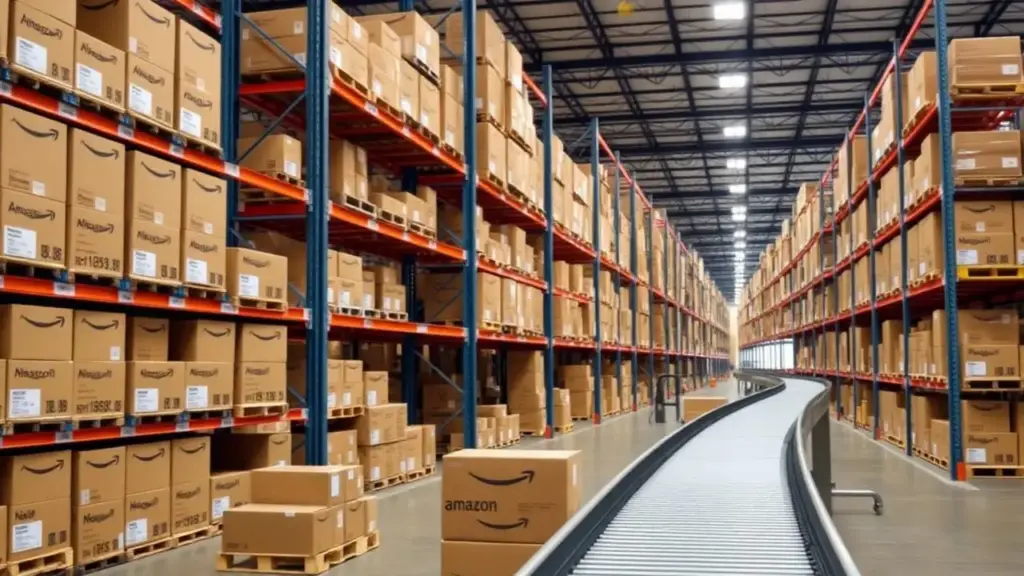
What if Amazon could store your products, pack every order, ship each box, and even handle many customer returns for you?
That sounds like a huge weight off your shoulders, and it is.
But here’s the catch: Amazon will not find your next winning product. It will not repair weak profit margins, improve a listing that fails to convert, or stop your advertising budget from disappearing without results.That is where expert support makes the difference. Amazon FBA handles the fulfillment. An Amazon FBA agency handles the strategy behind the sales.
So, what does each one actually do? Let’s break it down in simple terms, no confusing jargon, no unnecessary fluff.
What Does FBA Stand for in Amazon?
FBA stands for Fulfilment by Amazon.
So, what is an Amazon FBA? It is a model that lets sellers send inventory to Amazon’s fulfillment centers. When a customer orders, Amazon stores, picks, packs, ships, and delivers the product. It also manages much of the customer service and returns process.
You bring the product and plan. Amazon brings the warehouse network.
What Is Amazon FBA Program, Step-by-Step?
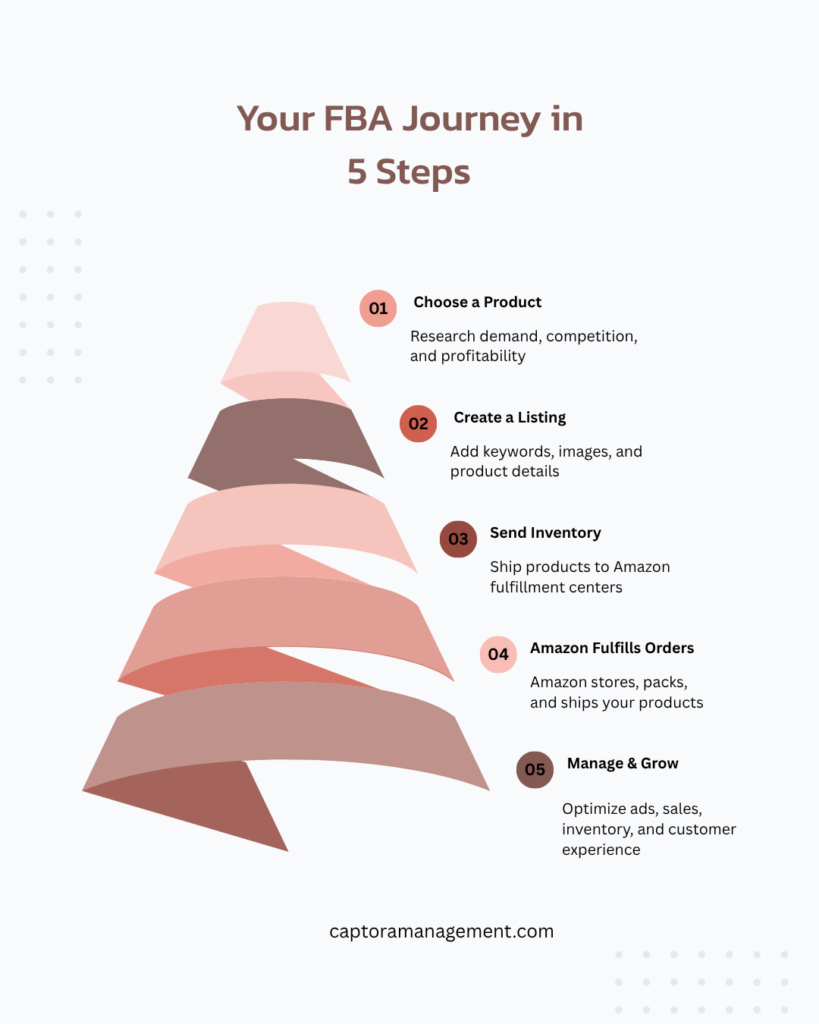
The process looks simple:
- Choose a product. Validate demand, competition, price, fees, and profit.
- Create the listing. Add strong copy, images, keywords, and product details.
- Prepare inventory. Apply the correct packaging, labels, and barcodes. Amazon requires units to arrive secure and scannable.
- Send stock to Amazon. Amazon receives and stores it.
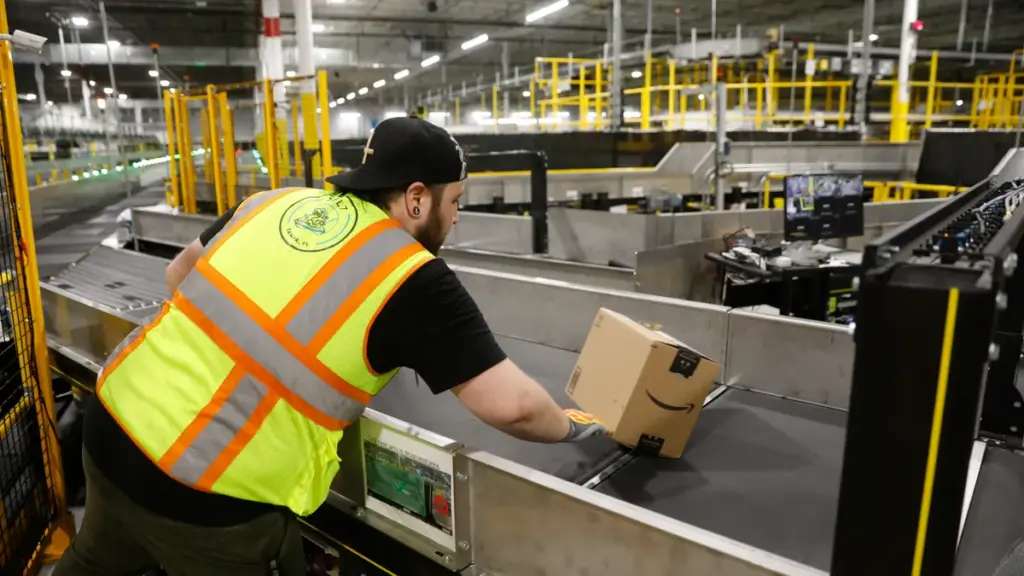
- Let Amazon fulfill orders. It picks, packs, ships, and processes eligible returns.
- Manage the business. You still control pricing, ads, inventory, profitability, and growth.
That final step matters. FBA removes boxes from your garage. It does not remove decisions from your calendar.
What Does Amazon Handle, and What Do You Handle?
Amazon’s fulfillment services usually cover:
- Storage
- Picking and packing
- Shipping
- FBA customer service
- Returns and exchanges
You still handle:
- Market research
- Supplier relationships
- Listing quality
- SEO strategies
- Marketing strategies
- Financial planning
- Inventory forecasting
- Cost analysis
- Sales optimization
Think of FBA as the engine room. It moves orders. Someone still needs to steer the ship.
What Does an Amazon FBA Agency Actually Do?
A strong amazon fba agency connects research, creative, advertising, operations, and finance. It does not treat each task as a separate island.
Ads affect rank. Images affect conversion rates. Pricing affects ad efficiency. Inventory affects sales momentum. Every part touches another part.
Here is what quality agency services should include.
a) Find the Opportunity Before You Buy
Product selection can make or break the business.
An Amazon FBA consultant studies demand, competition, price ranges, review gaps, seasonality, product size, likely FBA fees, and profit potential.
When sellers ask what to sell on Amazon FBA, I start with four questions:
- Does steady demand exist?
- Can the offer stand out?
- Can the margin survive fees and ads?
- Can the supplier deliver consistent quality?
The best products to sell on Amazon FBA are not always the products with the biggest search volume. A focused niche with healthy margins can beat a crowded category with expensive clicks.
b) Build a Listing That Earns the Click
A product page should guide a buying decision.
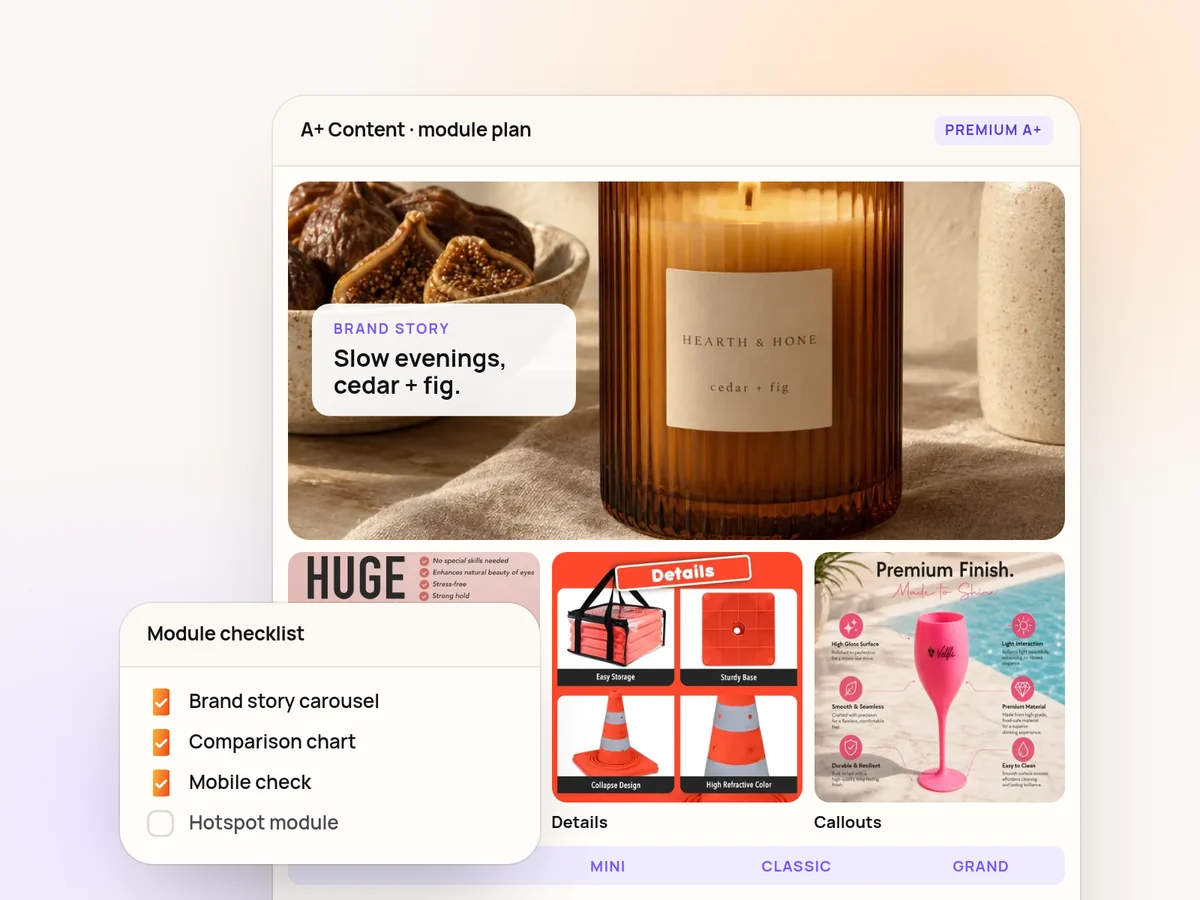
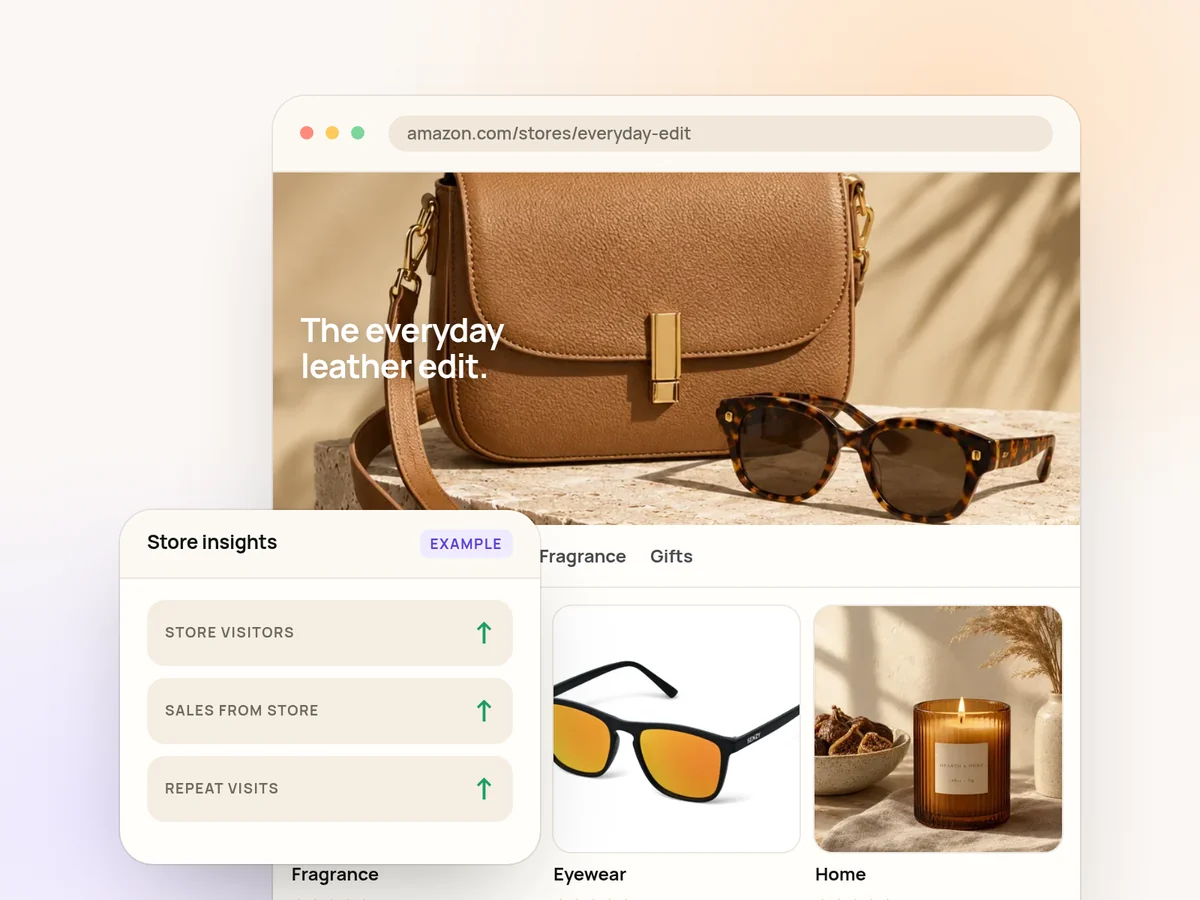
An agency improves keyword targeting, titles, bullets, descriptions, images, A+ content, storefront design, and mobile readability.
Good SEO strategies improve relevance. Strong creative builds trust. Together, they help traffic convert into sales.
c) Turn Ads Into a Growth System
Amazon PPC can grow a brand. It can also burn cash fast.
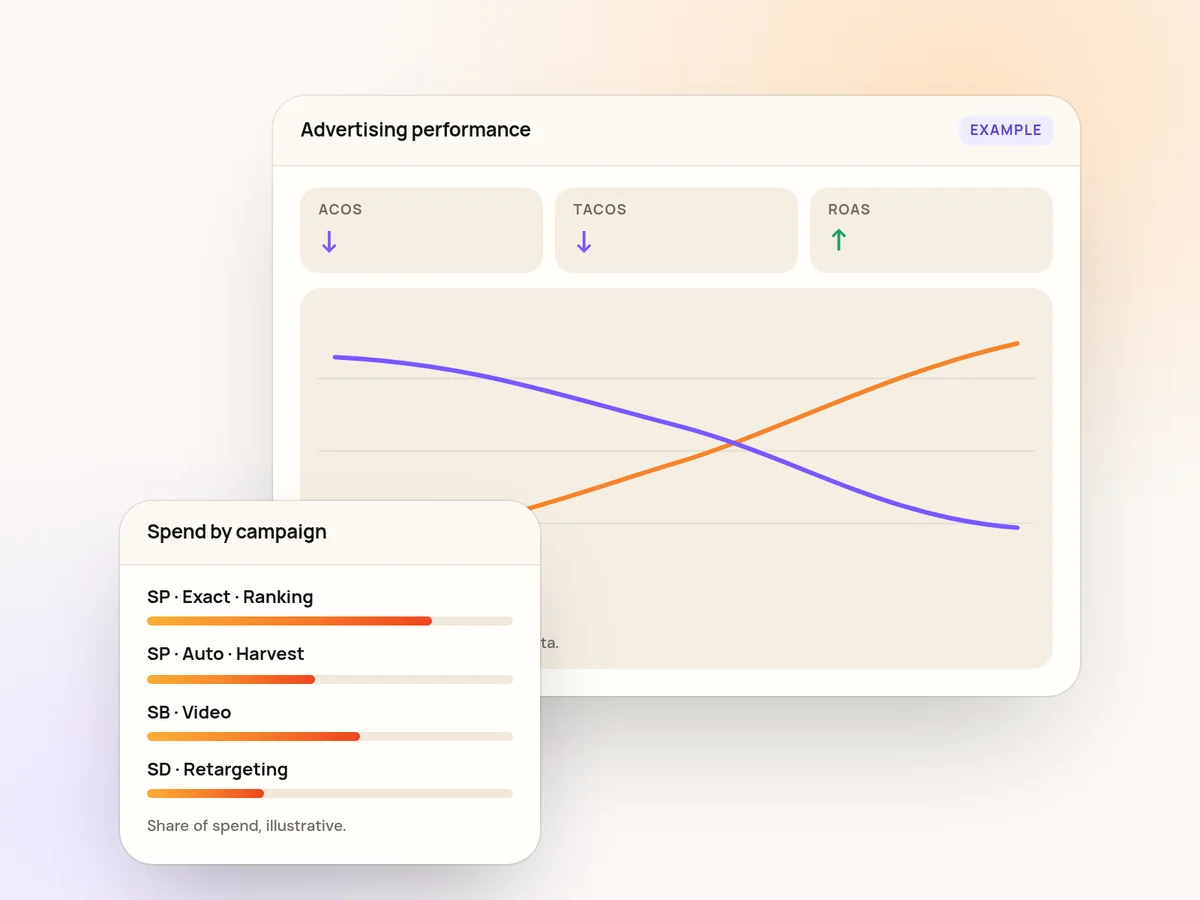
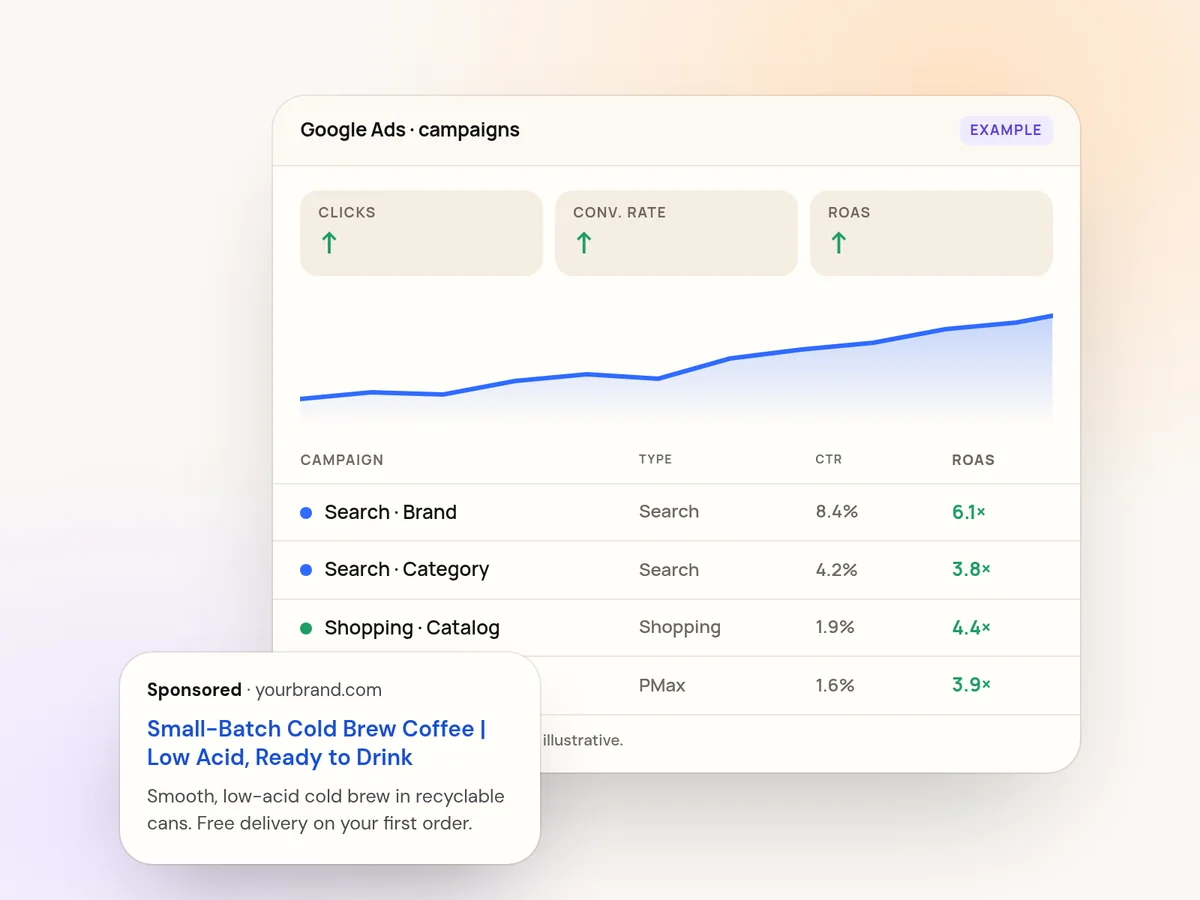
A capable team studies search terms, bids, placements, budgets, margins, and buyer behavior. It manages Sponsored Products, Sponsored Brands, Sponsored Display, negative keywords, competitor research, and campaign structure.
Affiliate marketing and off-Amazon traffic can support awareness too. But more traffic will not rescue a weak offer.
d) Protect Profit, Not Just Revenue
A revenue screenshot can look exciting. It can also hide a weak business. An agency reviews product cost, referral fees, FBA fees, ad spend, storage, discounts, returns, and landed costs.
A smart team asks:
i. Are sales growing?
ii. Is margin healthy?
iii. Can we repeat the result?
This is where financial planning becomes practical. Profit gives a brand room to reorder stock, test creative, and expand.
e) Manage Inventory and Daily Problems
Stockouts, suppressed listings, stranded inventory, poor forecasts, and policy issues can interrupt growth.
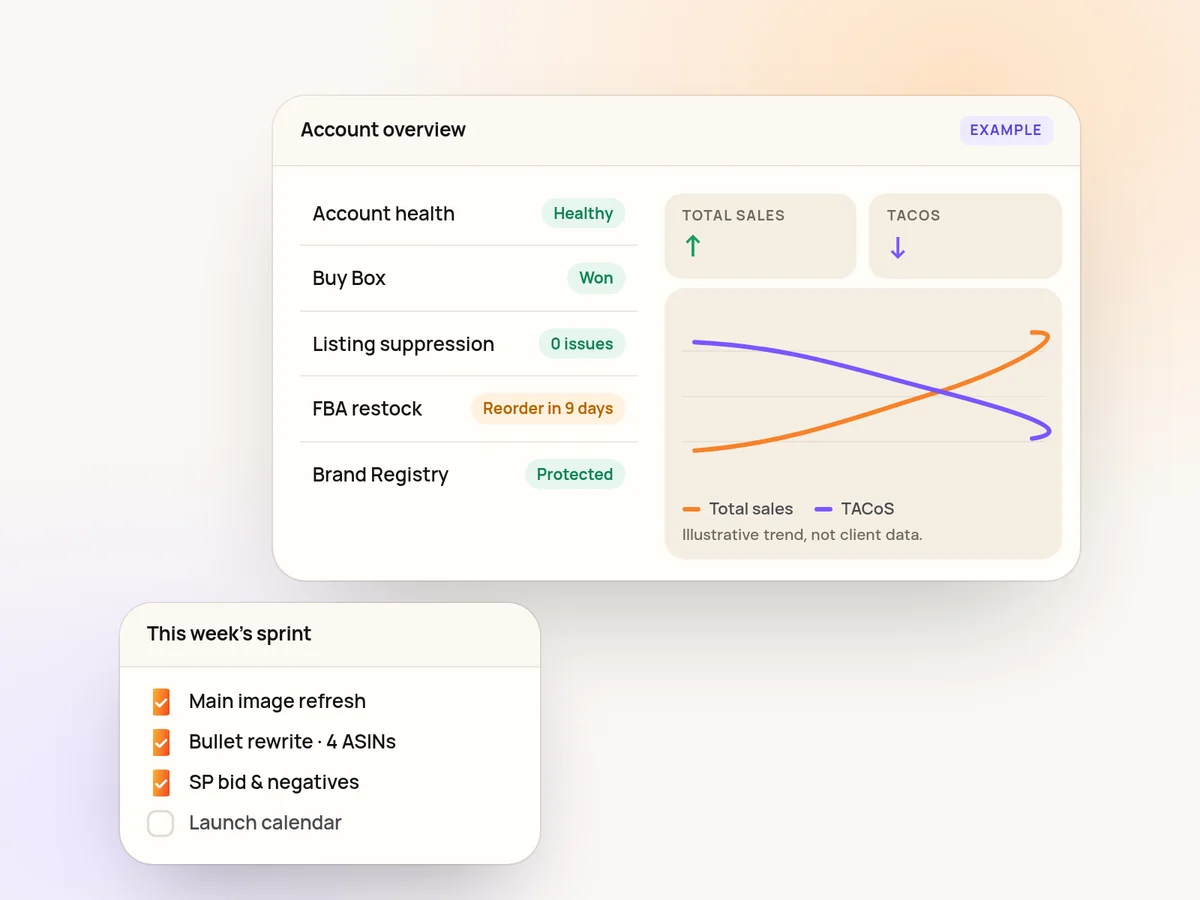
A full-service team watches inventory signals, account notifications, listing status, supplier timelines, and sales trends. It acts before small issues become expensive ones. Captora’s Amazon Full-Service Management connects PPC, listing SEO, creative, inventory signals, and account details around profitable growth. That joined-up approach creates stronger decisions.
What to Sell in Amazon FBA: Use a Better Filter
There is no universal winning product.
Look for products that are:
- Easy to understand
- Hard to damage
- Reasonably compact
- Simple to improve
- Supported by steady demand
- Able to carry healthy margins
- Sourced from reliable suppliers
- Allowed under Amazon’s policies
If you are asking, "What can I sell on Amazon FBA?” the broad answer is many product types. However, some categories need approval. Some products face restrictions. Some cannot use FBA.
Amazon tells sellers to review legal rules, product compliance, category approval, and FBA restrictions before listing. Do not choose a product because it looks popular. Choose it because the numbers, customer need, and competitive gap make sense.
What Are the Requirements for Amazon FBA?
You need an Amazon seller account and an eligible product. You also need accurate listings, compliant packaging, correct labels, and inventory that meets Amazon’s receiving rules.
Use this basic checklist:
- Verified seller account
- Category approval when required
- Valid product identifiers
- Correct barcodes and labels
- FBA-compliant packaging
- Accurate shipment plans
- Safe and legal products
- Enough margin for all costs
Amazon also sets storage and restock limits. Costs vary by factors such as size, weight, storage use, and fulfillment needs. Check current tools and fee tables before placing a large order.
Amazon FBA Mistakes That Cost Sellers Most

Many Amazon FBA mistakes happen before the first sale.
Sellers often:
- Order too much stock
- Ignore landed costs
- Copy competitors
- Launch with weak images
- Target broad keywords
- Run out of inventory
- Cut prices without a plan
- Treat revenue as profit
When performance slips, avoid random changes. Check traffic, conversion, competition, ads, inventory, and account health in order.
Our guide on why Amazon sales drop explains how to find the real cause before spending more money.
Is Amazon FBA Worth It?
Yes, for the right product, margin, and operating plan.
FBA can save time and simplify fulfillment. It can also make eligible products available with Prime shipping. But fees, storage, prep, returns, and limited packaging control can reduce profit. Amazon recommends comparing product type, fulfillment costs, branding needs, inventory demands, and sales velocity when choosing between FBA and merchant fulfillment.
Do not ask only, “is Amazon FBA worth it?”
Ask this instead:
Is FBA worth it for this product, at this price, with this margin and this sales plan?
That question leads to a better answer.
Do You Need an Amazon FBA Agency?
You may not need outside help when you have one simple product, plenty of time, and strong skills across ads, SEO, design, finance, and operations.
You may need an Amazon FBA agency when sales stall, ad costs rise, listings fail to convert, inventory feels reactive, or profit reporting stays unclear.
The right partner does not replace your vision. It turns that vision into a sharper operating system.
Final Takeaway
Amazon FBA solves a logistics problem. It does not automatically solve product, marketing, cash flow, or growth problems. A results-focused Amazon FBA agency researches the market, strengthens the offer, improves conversion, manages ads, protects margins, and helps the brand act faster.
That is the goal. Not more activity. Not prettier dashboards.
Better, more profitable growth.
FAQ's
Thinking about starting with Amazon FBA? Let’s answer the questions every seller asks before getting started.
What does FBA stand for in Amazon?
FBA stands for Fulfillment by Amazon. Amazon stores, packs, ships, and supports eligible orders.
Is Amazon FBA good for beginners?
It can be. Start small, learn the fees, and validate demand before ordering heavily.
How much money do I need for Amazon FBA?
It varies by product cost, freight, fees, creative work, inventory, and advertising.
Can I use Amazon FBA without an agency?
Yes. An agency helps when you need specialist support, clearer strategy, or faster growth.
What does an agency charge?
Pricing varies by scope. Common models include retainers, project fees, performance fees, or a mix.