



Let me be real with you: selling on Amazon without an Amazon SEO guide is like opening a store in the middle of a desert. You have great products, solid pricing, and a killer brand… but nobody finds you. That changes today.
Whether you're a first-time seller or a seasoned brand trying to crack the top of search results, this guide breaks down everything, from keyword research to backend keywords, in plain, no-fluff English. Let's get into it.
How Does Amazon Search Engine Work?
Before we talk strategy, let's talk about the brain behind everything, Amazon's A10 algorithm.
Here's the thing: Amazon isn't Google. While Google ranks pages based on authority and backlinks, Amazon's algorithm is obsessed with one thing, sales conversions. It asks: "Which product is most likely to get bought right now?"
The A10 algorithm evaluates your listings based on:
- Keyword relevance: Do your keywords match what shoppers are searching?
- Sales velocity: How fast are your products selling?
- Conversion rates: How many clicks turn into actual purchases?
- Customer reviews: Are buyers happy and leaving positive reviews?
- Click-through rate (CTR): Are customers clicking on your listing over competitors?
Understanding how Amazon SEO works is your first unfair advantage. Most sellers skip this; don't be one of them.
Step 1 Keyword Research: The Foundation of Everything
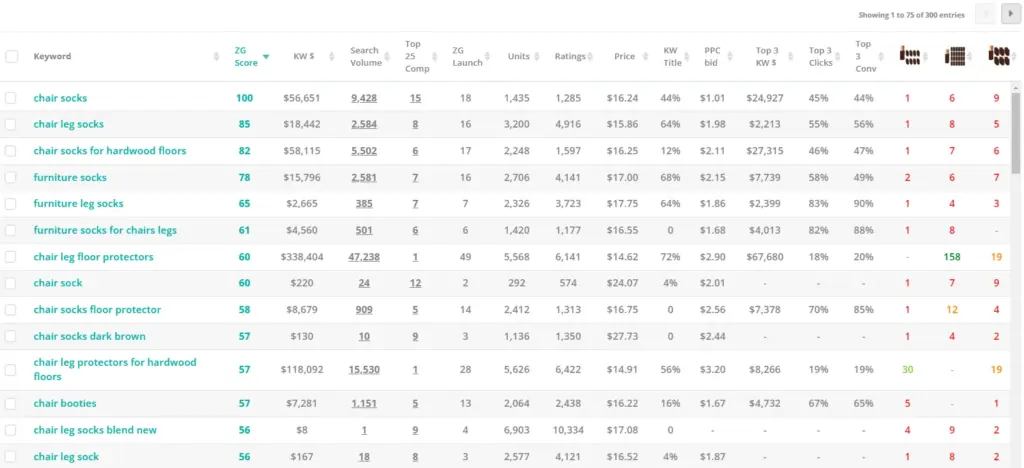
You can't rank for what Amazon doesn't know you're targeting. And that's where keyword research comes in. Think about it from the shopper's side. What would you type to find your product? That instinct, combined with solid data tools, is gold.
Here's how to approach Amazon SEO optimization through keyword research:
- i. Start with seed keywords: Type your product's basic description into the Amazon search bar and study the autocomplete suggestions. These are real, high-volume search terms buyers use right now.
- ii. Spy on competitors: Use tools like Helium 10, Jungle Scout, or any reliable SEO tool to run a reverse-ASIN lookup on your top competitors. Find what keywords are making them rank and find keyword gaps you can own.
- iii. Sort by intent, not just volume: "yoga mat" has millions of searches, but "non-slip thick yoga mat for women" has buyers. Always prioritize search terms that signal purchase intent over generic phrases.
💡 Pro Tip: Use short-tail keywords in your title and bullet points. Reserve long-tail terms for your backend keywords and product description.
Step 2 Crafting Product Titles That Rank AND Sell
Your product titles are the single most powerful real estate on your listing. Amazon reads them. Customers read them. Both need to be impressed.
Here's the winning formula YOU should swear by:
[Brand Name] + [Primary Keyword] + [Key Feature] + [Use Case/Size/Specs]
For example:
NovaBrand Stainless Steel Water Bottle – Leak-Proof, Insulated, 32oz – For Gym, Hiking & Travel
A few non-negotiable rules for product titles:
- Keep it under 150–180 characters (Amazon's sweet spot)
- Front-load your primary keyword; don't bury it
- Capitalize the first letter of each word
- Never keyword-stuff; if it reads weird to a human, it'll hurt you
- Avoid promotional language like "Best Price" or "#1 Seller,'' Amazon penalizes this
Step 3 Bullet Points That Do the Heavy Lifting
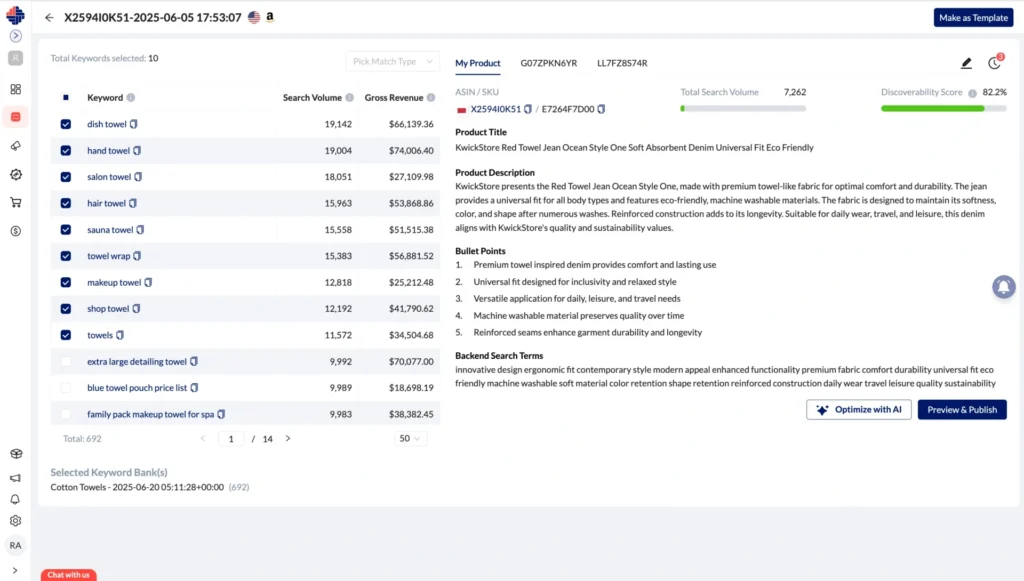
Your bullet points have a two-part job: rank and convert. Most sellers only focus on one, and that's where they lose.
Follow the Feature → Benefit → Proof formula for every single bullet:
- Feature: What the product has
- Benefit: What the customer gains
- Proof: Why they should believe you
For example:
ULTRA-GRIP SOLE: Non-slip rubber base keeps your mat locked in place during intense sessions, so you can focus on your flow, not your footing. Tested by 10,000+ yogis worldwide.
Also, while crafting bullets as part of your broader Amazon SEO strategy:
- i. Cap each bullet at 250 bytes: Amazon's limit
- ii. Include secondary keywords naturally: don't force them in awkwardly
- iii. Address buyer objections upfront: sizing, compatibility, durability, warranty
Step 4 Product Images: Your Silent Salesperson
Here's a truth bomb: customers judge your product in under 3 seconds. And they do it almost entirely through your images. High quality visuals aren't optional anymore; they're survival.
Your image stack should include:
- Main image: Pure white background, product filling 85%+ of the frame
- Lifestyle shots: Show the product in use in real-world settings
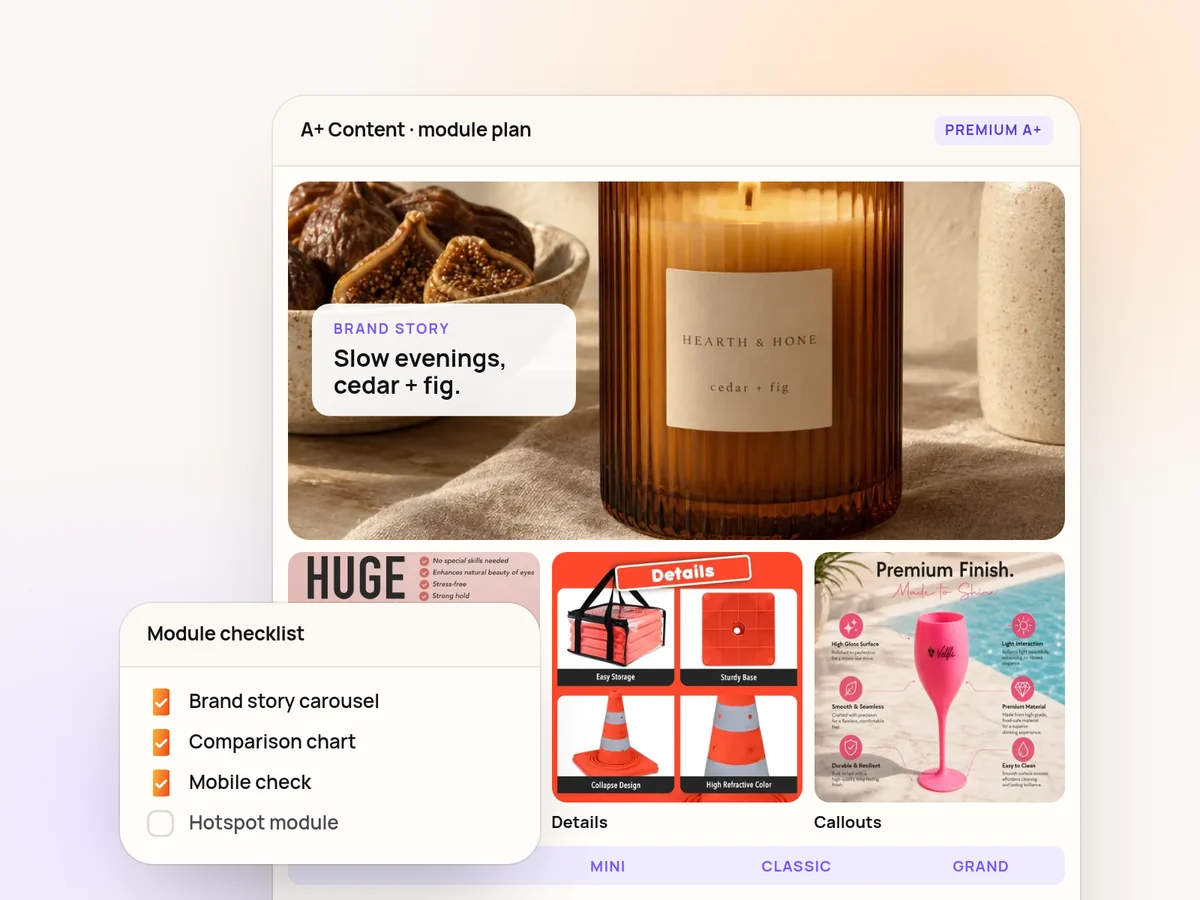
- Infographic images: Highlight key features with callout text
- Scale image: Show size comparisons to eliminate guesswork
- 360° or detail shots: Let buyers zoom in with confidence
When you optimize product listings with professional imagery, your CTR and conversion rates both climb, and Amazon's algorithm takes notice.
Step 5 Product Description + Backend Keywords
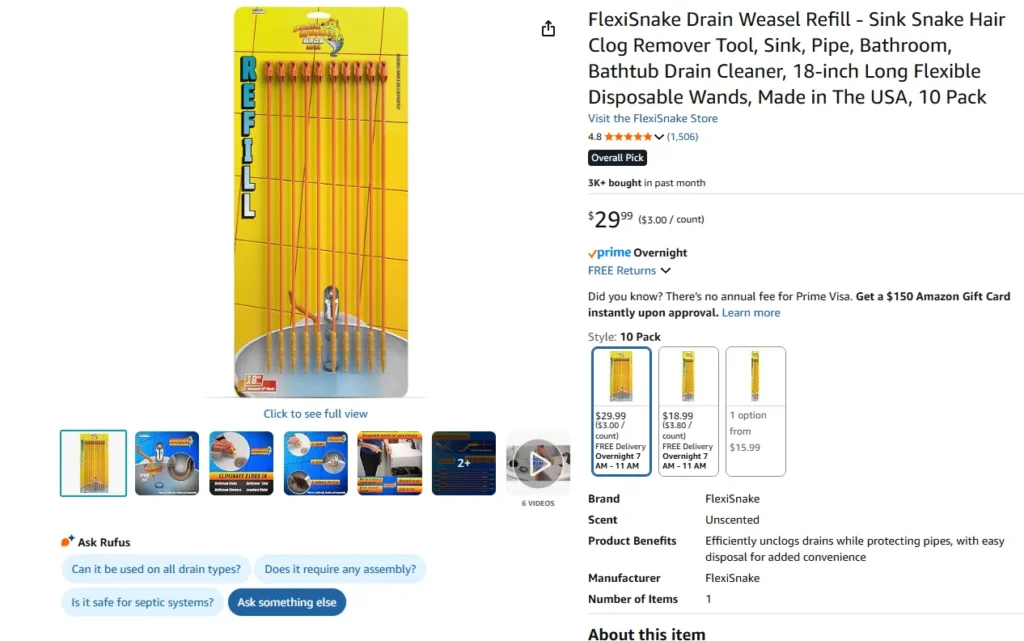
Don't sleep on the product description. Even if shoppers skim it, Amazon's algorithm reads every word. Use this space to:
- Expand on secondary keywords that didn't fit in your title or bullets
- Tell a mini brand story; make it feel human, not robotic
- Add long-tail phrases and use-case scenarios naturally
And then there are backend keywords, the hidden layer of your listing that most sellers either ignore or misuse.
Here's how to nail it:
- a) Use all lowercase letters, separated by spaces (no commas needed)
- b) Never repeat keywords already in your title or bullets; use synonyms instead
- c) Include common misspellings, abbreviations, and alternate product names
- d) Stay within 249 bytes; Amazon doesn't index beyond that
Step 6 Customer Reviews: Your Amazon SEO Secret Weapon
No complete Amazon SEO guide skips reviews, and for good reason. Positive reviews directly influence your ranking and your conversion rate.
Here's how to build review momentum ethically:
- Enroll in Amazon Vine (if brand registered) to get early verified reviews
- Enable automated follow-up emails to request reviews post-purchase
- Respond to negative reviews professionally; it signals brand credibility
- Focus relentlessly on product quality; the best review strategy is a product that earns 5 stars on its own
Reviews signal to Amazon that your product listing satisfies customers, which pushes you higher in search results. It's a flywheel, rank higher → sell more → get more reviews → rank even higher.
Step 7: Use the Right Amazon SEO Tool
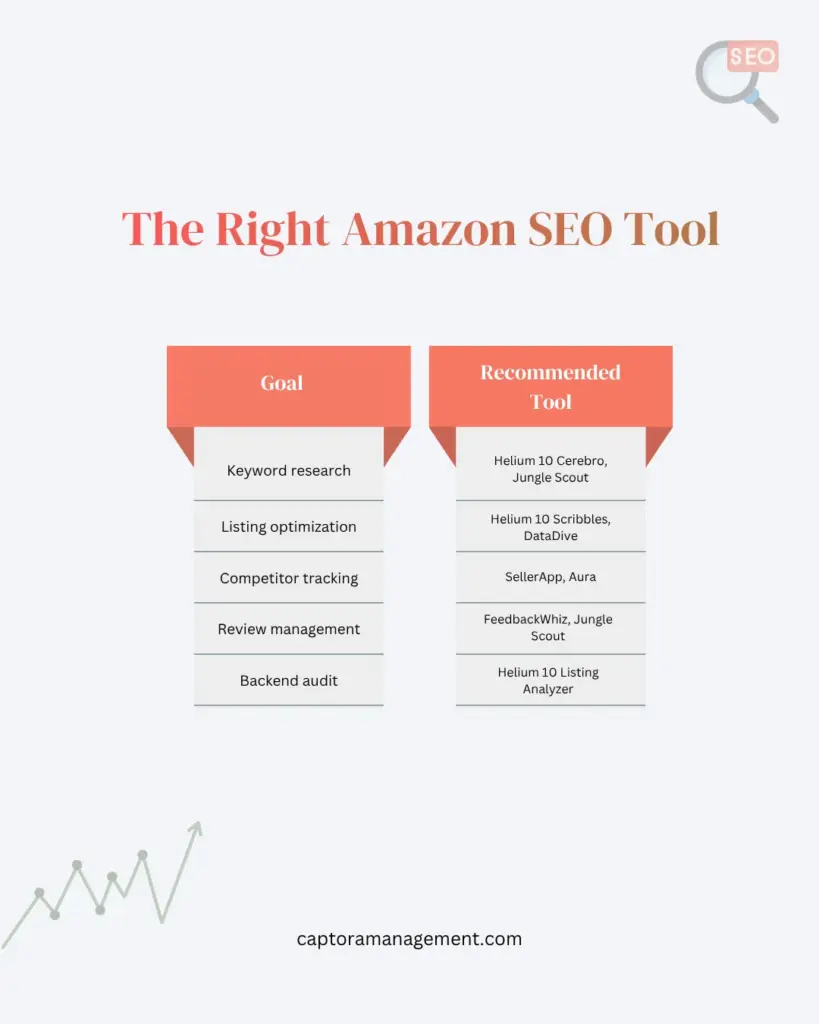 Trying to do Amazon seller SEO manually in 2026 is like navigating a city without GPS. Above are the tools we recommend based on goal.
When used consistently, a good SEO tool can cut your research time in half and dramatically improve Amazon SEO results across your entire catalog.
Bringing It All Together: Your Amazon SEO Checklist
Before you hit publish on any listing, run through this:
- Keyword research completed: primary, secondary, and long-tail terms mapped
- Title optimized with primary keyword front-loaded
- 5 bullet points written using Feature → Benefit → Proof
- The product description is keyword-rich and readable
- Backend keywords filled (no duplicates, 249 bytes max)
- All 9 image slots used with high-quality visuals
- A+ Content created (brand-registered sellers)
- Review strategy activated
Product visibility doesn't happen by accident. The sellers who make their products rank are the ones who treat every listing as a living, breathing asset, always testing, always improving.
Bottom Line
Wrapping up, Amazon SEO isn’t a one-time setup; it’s an ongoing process of testing, optimizing, and improving. The sellers who win aren’t always the ones with the best products, but the ones who understand how to make their listings visible, clickable, and convincing. If you consistently refine your keywords, improve your content, and focus on customer experience, rankings will follow naturally. Stay patient, stay data-driven, and treat every listing like a long-term asset, not a quick launch.
FAQ's
Still unsure how it works? Here’s a quick look at the FAQs sellers ask most about Amazon SEO in 2026.
What is Amazon SEO and why does it matter?
Amazon SEO is the process of optimizing your product listings so they rank higher in Amazon's search results. Higher rankings = more visibility = more sales.
How do I do SEO on Amazon as a beginner?
Start with solid keyword research, build an optimized product title, craft compelling bullet points, add backend keywords, and use professional product images. Consistent improvements compound over time.
What is the best Amazon SEO tool in 2026?
Helium 10 remains the most comprehensive option, offering keyword research, listing optimization, and competitor tracking all in one platform.
How long does Amazon SEO take to show results?
Most sellers see measurable improvements in product visibility and rankings within 2–6 weeks of optimizing their listings, depending on competition level and sales history.
Do customer reviews affect Amazon SEO rankings?
Absolutely. Positive reviews improve your conversion rate, which signals to Amazon's algorithm that your product satisfies buyers, directly boosting your ranking in search results.
Selling on Amazon is a long game, but with the right amazon SEO guide in your corner, you're already ahead of 90% of sellers out there. Stay consistent, keep testing, and let the algorithm reward your effort.